10+
10+


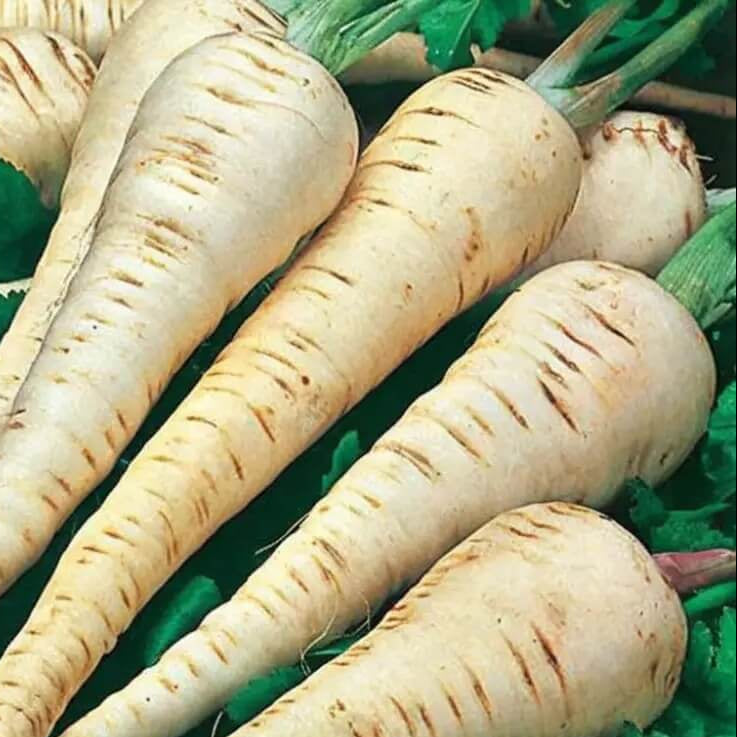
Parsnip seeds produce cool-season biennial plants grown as annuals for their elongated, tapered roots. The plants form a rosette of finely divided foliage above the soil while developing a thick, edible root below. Parsnips perform best in mild to cool climates with a long growing period, allowing the roots to mature gradually. They prefer deep, loose, well-drained soil to support straight root development and require consistent moisture during early growth. Commonly cultivated in garden beds, parsnips are suitable for extended seasonal growing in temperate conditions.
Features
- Cool-season crop suited to mild and temperate climates
- Produces long, tapered underground roots
- Requires deep, loose soil for proper root formation
- Grows as a biennial but typically cultivated as an annual
- Suitable for garden beds with consistent moisture
Specifications
- Scientific Name: Pastinaca sativa
- Common Name (US): Parsnip
- Seed Type / Variety: Root vegetable variety
- Growth Habit: Low-growing rosette with underground root
- USDA Zones: 2–9 (grown as annual)
- Planting Season: Early spring
- Growing Season: Spring to late fall
- Sowing Season: February to April (cool regions); October to December (mild winter regions)
- Germination Time and Conditions: 14–28 days at 10–20°C with consistent moisture
- Sunlight Requirements: Full sun to partial shade
- Soil Requirements: Deep, loose, well-drained sandy or loamy soil
- Watering Needs: Moderate, consistent watering
- Mature Plant Size: 30–60 cm height; 20–30 cm spread
- Plant Spacing: 10–15 cm between plants