10+
10+


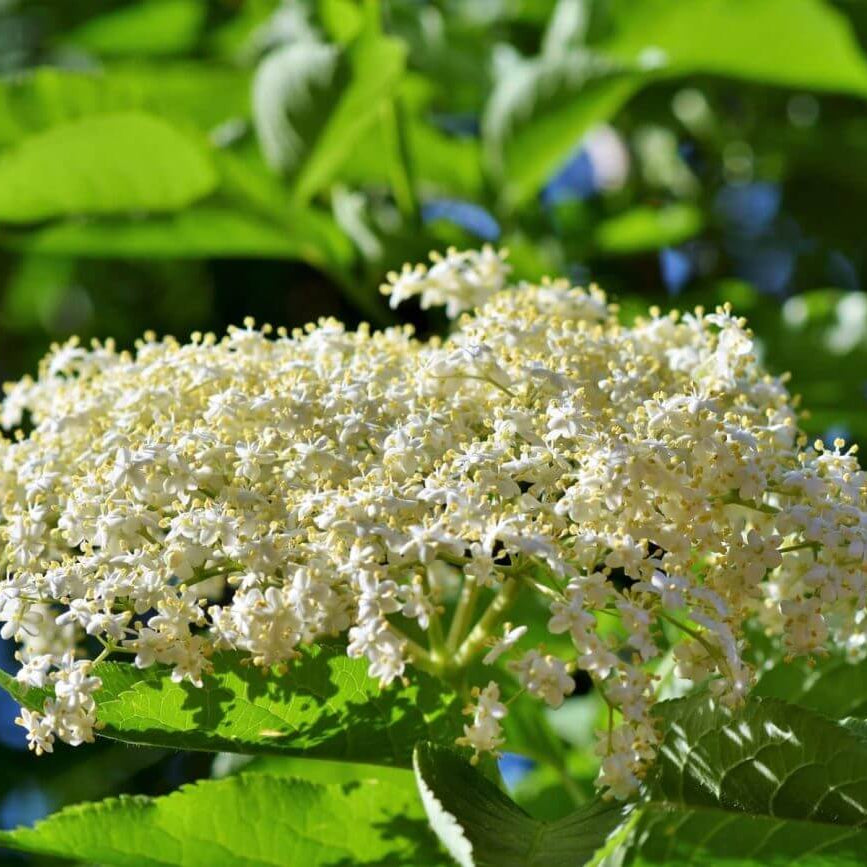
Elderflower is a deciduous shrub known for its upright to spreading growth and compound foliage. It produces clusters of small, star-shaped flowers on branching stems during the growing season. This plant grows well in temperate climates and performs best in full sun to partial shade with well-drained, moderately fertile soil. Elderflower establishes gradually and is suitable for garden beds, borders, and naturalized planting, where it can develop into a long-lived shrub.
Features
- Deciduous shrub with upright to spreading growth
- Compound foliage with branching stems
- Produces clusters of small, star-shaped flowers
- Suitable for temperate growing conditions
- Adaptable to garden beds, borders, and naturalized areas
Specifications
- Scientific name: Sambucus nigra
- Common name (US): Elderflower
- Seed type / variety: Open-pollinated
- Growth habit: Upright, woody shrub
- USDA zones: 4–8
- Planting season: Spring or fall
- Growing season: Spring to summer
- Sowing Season: February to April, September to November
- Germination time and conditions: 30–90 days with stratification required
- Sunlight requirements: Full sun to partial shade
- Soil requirements: Well-drained, moderately fertile soil
- Watering needs: Moderate, consistent moisture
- Mature plant size: 300–600 cm height, 300–400 cm spread
- Plant spacing: 200–300 cm between plants