10+
10+


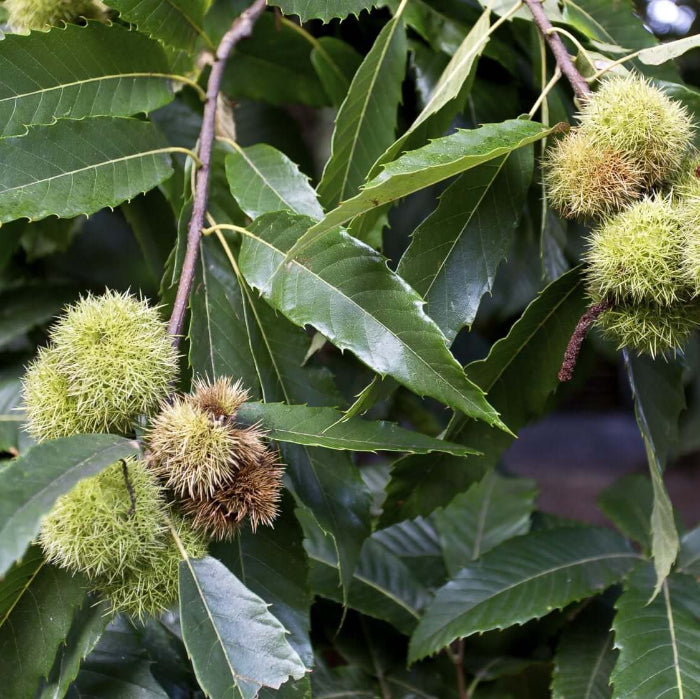
Chestnut is a deciduous tree species commonly grown in temperate regions for its strong growth habit and adaptability to well-drained soils. It develops a broad, spreading canopy with serrated leaves and a deep root system that supports long-term establishment. Chestnut trees prefer moderate climates with seasonal temperature variation and perform best in fertile, slightly acidic soils. Suitable for orchards, large gardens, and agroforestry systems, chestnut can be grown from seeds with proper stratification to support germination.
Features
- Deciduous tree with broad canopy and upright growth
- Adapted to temperate climates with seasonal changes
- Suitable for orchards, landscapes, and long-term planting
- Develops a deep root system for stability
- Performs well in well-drained, slightly acidic soils
Specifications
- Scientific name: Castanea spp.
- Common name (US): Chestnut
- Seed type / variety: Standard variety
- Growth habit: Large, deciduous tree
- USDA zones: 4-9
- Planting season: Fall to early spring
- Growing season: Spring to fall
-
Sowing Season:
- Fall: October to December
- Early Spring: February to March
- Germination time and conditions: 4-8 weeks with cold stratification at 1-5°C
- Sunlight requirements: Full sun
- Soil requirements: Well-drained, fertile, slightly acidic soil
- Watering needs: Moderate, consistent moisture during establishment
- Mature plant size: 15-30 meters height, 10-15 meters spread
- Plant spacing: 8-12 meters between plants