10+
10+


Black Walnut is a deciduous tree valued for its
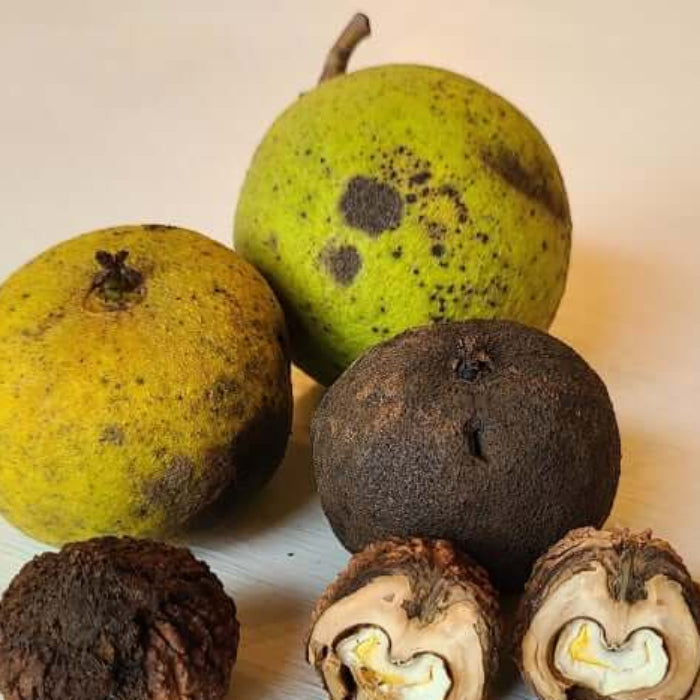
Black walnut seeds produce large, long-lived deciduous trees with a strong, upright growth habit and a broad canopy. These trees are well adapted to temperate climates and develop steadily over time into valuable timber and nut-producing specimens. Black walnut performs best in full sun with deep, well-drained, fertile soil and moderate watering during establishment. Suitable for large landscapes, farms, and reforestation projects, it establishes gradually and grows into a substantial tree.
Features
- Large deciduous tree with strong, upright growth
- Produces edible nuts and valuable hardwood
- Suitable for large gardens, farms, and forestry
- Prefers deep, fertile, well-drained soil
- Long-lived and hardy
Specifications
- Scientific Name: Juglans nigra
- Common Name (US): Black Walnut
- Seed Type / Variety: Nut-bearing tree seed
- Growth Habit: Upright, spreading deciduous tree
- USDA Zones: 4–9
- Planting Season: Fall (preferred) or early spring
- Growing Season: Spring to fall
- Sowing Season: Fall (natural stratification) or spring after cold stratification
- Germination Time and Conditions: 90–120 days with cold stratification at 1–5°C
- Sunlight Requirements: Full sun
- Soil Requirements: Deep, well-drained, fertile soil
- Watering Needs: Moderate during establishment
- Mature Plant Size: 20–30 meters height; 12–18 meters spread
- Plant Spacing: 8–12 meters between trees