10+
10+


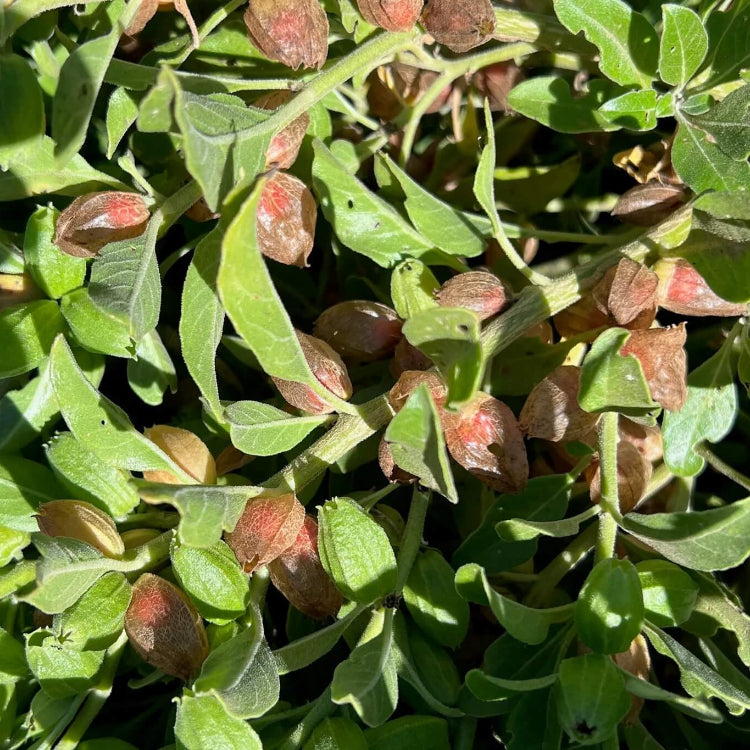
Ashwagandha is a warm-season herbaceous plant known for its bushy growth and branching stems. It develops oval leaves and produces small flowers followed by berry-like structures during the growing season. This plant grows well in warm climates and performs best in full sun with well-drained, sandy to loamy soil. Ashwagandha establishes steadily and is suitable for garden beds and container planting, adapting well to dry and semi-arid conditions.
Features
- Bushy plant with branching growth habit
- Develops oval leaves with seasonal flowering
- Suitable for warm and dry climates
- Adaptable to garden beds and containers
- Performs well in well-drained soils
Specifications
- Scientific name: Withania somnifera
- Common name (US): Ashwagandha
- Seed type / variety: Open-pollinated
- Growth habit: Upright, bushy annual/perennial (depending on climate)
- USDA zones: 7–11
- Planting season: Spring
- Growing season: Warm season
- Sowing Season: February to May
- Germination time and conditions: 7–14 days at 20–25°C
- Sunlight requirements: Full sun
- Soil requirements: Well-drained, sandy to loamy soil
- Watering needs: Low to moderate, drought-tolerant once established
- Mature plant size: 60–120 cm height, 60–90 cm spread
- Plant spacing: 45–60 cm between plants