10+
10+


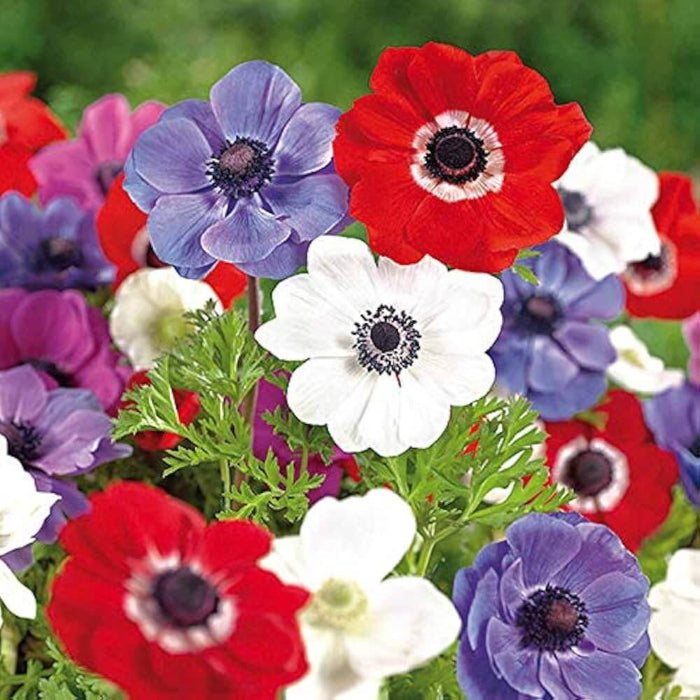
Anemone, commonly known as windflower, refers to a group of flowering plants in the Anemone genus valued for their delicate blooms and upright growth. These plants develop slender stems with divided foliage and produce single or semi-double flowers in a range of colors. Anemones are adapted to temperate climates and perform best in well-drained, moderately fertile soil with full sun to partial shade. They are commonly used in garden beds, borders, and naturalized planting. Seeds may require a period of stratification and can take time to germinate and establish under suitable conditions.
Features
- Herbaceous plant with upright growth habit
- Produces delicate flowers in mixed colors
- Suitable for borders, garden beds, and naturalized areas
- Adapted to temperate climates
- Establishes gradually from seeds
Specifications
- Scientific name: Anemone spp.
- Common name (US): Anemone
- Seed type / variety: Mixed colors
- Growth habit: Herbaceous perennial
- USDA zones: 4-9 (varies by species)
- Planting season: Fall or early spring
- Growing season: Spring to summer
-
Sowing Season:
- Fall: September to November
- Early Spring: February to March
- Germination time and conditions: Several weeks; often benefits from cold stratification
- Sunlight requirements: Full sun to partial shade
- Soil requirements: Well-drained, moderately fertile soil
- Watering needs: Moderate, consistent moisture
- Mature plant size: 20-60 cm height, 20-40 cm spread
- Plant spacing: 20-30 cm between plants